

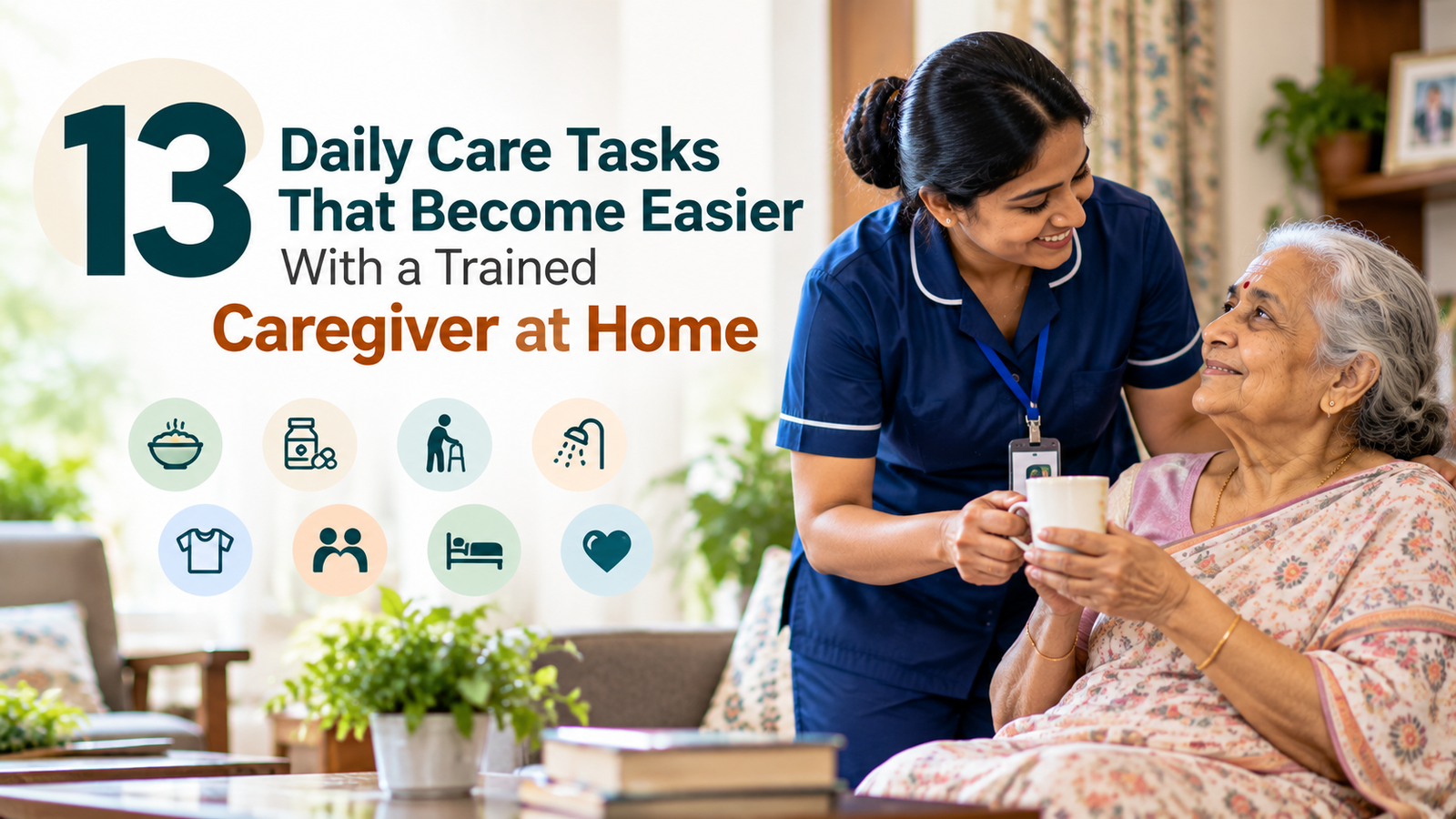
Caring for an elderly parent, recovering patient, or family member with limited mobility can start with simple tasks. Helping with breakfast. Walking them to the bathroom. Reminding them about medicines. Preparing lunch.
But as the patient’s needs increase, these small responsibilities can quickly become a full-time commitment.
For families balancing work, children, household responsibilities, and caregiving, having the right support can make everyday life more manageable.
A trained caregiver at home in Jaipur can assist with several appropriate daily activities while helping patients maintain comfort, dignity, and as much independence as possible.
The important point is that caregiving should not be about doing everything for the patient. Good care means providing the right amount of assistance, encouraging safe independence, and following the patient’s healthcare plan.
Here are 13 everyday care tasks that can become easier with appropriate professional support.
1. Getting Out of Bed and Starting the Day
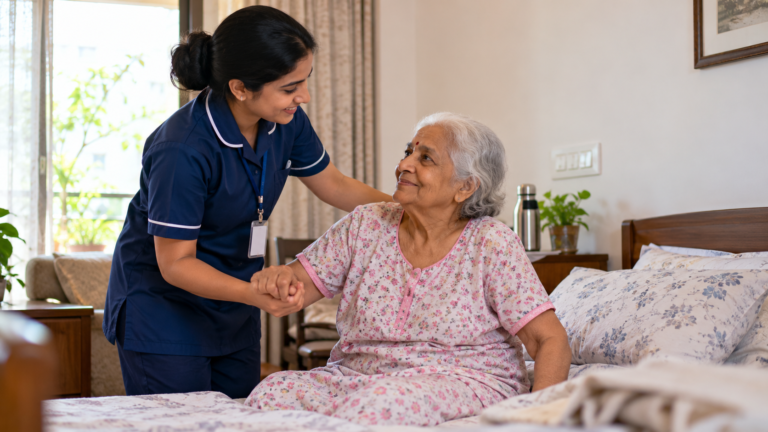
For some elderly or recovering patients, getting out of bed can be surprisingly difficult.
Weakness, reduced balance, joint discomfort, or prolonged bed rest may make the first movement of the day challenging.
A caregiver can provide appropriate assistance with:
- Sitting up
- Getting out of bed
- Moving to a chair
- Preparing morning essentials
- Organizing the immediate surroundings
The caregiver should follow safe-transfer techniques appropriate to the patient’s condition.
Patients with significant mobility problems may require guidance from a healthcare professional or physiotherapist regarding transfers and movement.
2. Bathing and Personal Hygiene
Personal hygiene is an important part of everyday wellbeing, but bathing can become difficult when someone has limited strength or balance.
A caregiver may assist with appropriate personal-care activities such as:
- Bathing
- Changing clothes
- Grooming
- Oral hygiene
- Hair care
- Toileting
- Maintaining personal cleanliness
The level of assistance should respect the patient’s privacy and independence.
For elderly people, maintaining dignity during personal care is just as important as completing the task itself.
Professional caregiver services in Jaipur can be particularly useful when family members are uncomfortable or unavailable to provide regular personal-care assistance.
3. Preparing Meals
Nutrition becomes more difficult when an individual cannot comfortably prepare food independently.
A caregiver can help with appropriate meal-related tasks such as:
- Preparing simple meals
- Serving food
- Setting up the eating area
- Following family-provided dietary instructions
- Keeping water accessible
- Cleaning up after meals
The patient’s diet should follow recommendations from their doctor or dietitian where applicable.
If the patient has swallowing difficulties, diabetes, kidney disease, or another condition requiring a specialized diet, families should obtain appropriate professional dietary guidance.
4. Feeding Assistance
Some patients can eat independently but require someone nearby to help.
Others may need physical assistance with meals because of weakness, reduced mobility, or difficulty handling utensils.
A caregiver may provide feeding assistance when this falls within their role and training.
Families should be especially careful when a patient has swallowing difficulties.
Signs such as coughing repeatedly while eating, choking, changes in voice after swallowing, or difficulty managing food should be discussed with an appropriate healthcare professional.
Specialized feeding procedures should only be performed by appropriately trained professionals according to medical instructions.
5. Medication Reminders
Medication schedules can become complicated, especially for elderly patients taking multiple prescriptions.
A caregiver can help with routine reminders such as:
- “It is time for your prescribed medicine.”
- Keeping the medication schedule visible
- Reminding the patient about prescribed timings
- Communicating concerns to family members
However, caregivers should not independently change doses, stop medications, or decide which medicine a patient should take.
Medication decisions belong to the prescribing healthcare professional.
When families are struggling to keep track of routines, a caregiver at home in Jaipur can provide useful day-to-day organizational support.
6. Walking and Mobility Assistance
Mobility assistance is another common reason families seek home-based caregiving.
A patient may need help moving:
- From the bed to a chair
- From the bedroom to the living room
- To the bathroom
- Around the house
- During approved daily movement
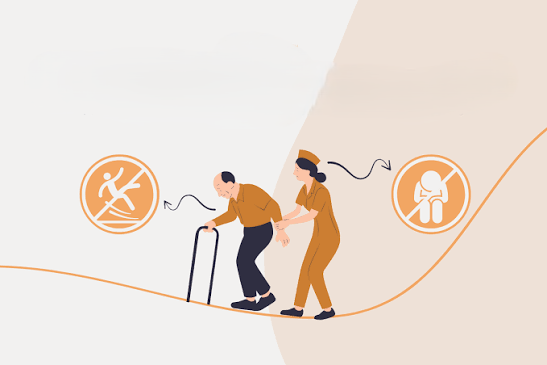
The goal should be to support safe independence rather than unnecessarily restricting movement.
If physiotherapy or rehabilitation exercises are required, they should be performed according to professional guidance.
A caregiver can assist with the routine when appropriately instructed, but should not replace a qualified physiotherapist.
7. Toileting Assistance
Using the bathroom can become challenging for elderly or recovering patients.
A caregiver may assist with appropriate tasks such as:
- Walking to the bathroom
- Preparing the space
- Helping with clothing when necessary
- Maintaining privacy
- Basic hygiene assistance
- Returning safely to bed or a chair
Families should ensure the bathroom is accessible and free from unnecessary hazards.
For patients with significant mobility limitations or medical devices, the care plan should be discussed with an appropriate healthcare professional.
8. Changing Clothes and Maintaining Grooming
Something as simple as getting dressed can become tiring for someone with limited mobility.
A caregiver may help with:
- Selecting appropriate clothing
- Changing clothes
- Putting on socks
- Basic grooming
- Hair care
- Preparing clothing for the day
Whenever possible, patients should be encouraged to complete the parts they can safely manage themselves.
This preserves independence and can also improve confidence.
9. Maintaining a Comfortable Home Environment
Caregiving is not limited to direct physical assistance.
The immediate environment also affects comfort and safety.
A caregiver can help with appropriate everyday tasks such as:
- Keeping essential items within reach
- Organizing frequently used belongings
- Keeping walking paths clear
- Preparing the patient’s room
- Changing basic bedding when required
- Keeping the immediate care area organized
The purpose is not to turn the caregiver into a general household worker.
Instead, the focus should remain on tasks directly related to the patient’s comfort, safety, and daily care.
10. Providing Companionship
One of the less visible challenges of aging or prolonged recovery is loneliness.
A person who spends most of the day alone may have limited conversation and social interaction.
A caregiver can provide companionship through:
- Conversation
- Reading
- Watching television together
- Helping the person communicate with family
- Accompanying them during appropriate activities
- Encouraging participation in their normal routine
Companionship does not replace medical or psychological care, but meaningful human interaction can make the day feel less isolating.
For families living away from their elderly parents, this can be an especially valuable part of home care.
11. Supporting an Everyday Exercise or Activity Routine
Movement can be an important part of maintaining function, but exercises must be appropriate for the individual’s condition.
A caregiver may help a patient follow simple activities or exercises that have already been recommended by a qualified healthcare professional.
For example, the caregiver may:
- Remind the patient about the routine
- Prepare the space
- Assist with safe movement when instructed
- Encourage participation
- Communicate difficulties to family members
Caregivers should not independently prescribe exercises or rehabilitation programs.
If pain, dizziness, unusual weakness, breathing difficulty, or another concerning symptom occurs during activity, stop and seek appropriate medical guidance.
12. Helping With Family Communication
When family members cannot be physically present throughout the day, communication becomes important.
A caregiver can help families stay informed about appropriate day-to-day observations, such as:
- Whether the patient ate
- Whether they appeared unusually tired
- Whether they needed additional assistance
- Whether they completed normal activities
- Whether something appeared different from usual
Families can establish a simple communication routine through phone calls or messages.
However, caregivers should not be expected to diagnose medical conditions.
Any significant change in health should be communicated to the appropriate healthcare professional.
13. Supporting a Consistent Daily Routine
Perhaps the biggest benefit of professional caregiving is consistency.
A patient may have a daily routine involving:
Morning:
Wake-up → hygiene → breakfast → prescribed medication → appropriate activity
Afternoon:
Lunch → hydration → rest → medication reminders if prescribed → companionship
Evening:
Light activity → dinner → hygiene → family communication
Night:
Prepare essentials → ensure safe access to the bathroom → comfortable rest
A predictable routine can make daily life easier for both the patient and family.
The actual schedule should always be personalized according to the patient’s health needs and doctor’s recommendations.
Why Families Choose a Caregiver at Home
Families often reach a point where they realize they cannot personally manage every caregiving responsibility.
This does not mean they care any less.
In fact, arranging professional support can allow family members to focus more on the emotional side of caregiving instead of spending every hour coordinating basic tasks.
A caregiver at home in Jaipur may be particularly useful when:
- Family members have full-time jobs
- Children live in another city
- An elderly parent spends long periods alone
- A patient has limited mobility
- A person needs assistance with daily activities
- Someone is recovering after hospitalization
- The family needs additional daytime support
- Personal-care assistance is required
The level of care should always match the patient’s actual needs.
Caregiver vs Nurse: Understanding the Difference
One of the most common questions families ask is whether they need a caregiver or a nurse.
The answer depends on the type of assistance required.
A Caregiver May Help With:
- Personal care
- Bathing assistance
- Dressing
- Feeding assistance
- Mobility support
- Companionship
- Meal support
- Medication reminders
- Daily routine assistance
A Nurse May Be Required For:
- Clinical nursing procedures
- Injections
- IV-related care
- Wound dressing
- Certain catheter-related services
- Vital monitoring when clinically indicated
- Other medical procedures requiring appropriate nursing training
These roles should not be treated as interchangeable.
If a patient requires a clinical procedure, the family should arrange care from an appropriately qualified professional.
How to Choose the Right Caregiver at Home in Jaipur
Before hiring a caregiver, families should ask several practical questions.
1. What training does the caregiver have?
Ask about relevant training and experience.
2. What type of patients have they cared for?
Experience should ideally match the patient’s needs.
3. What tasks can they perform?
Clearly define responsibilities before care begins.
4. How will the family receive updates?
Establish a communication process.
5. What happens if the caregiver is unavailable?
Ask about replacement or backup arrangements.
6. Can the caregiver work according to the patient’s routine?
Care should fit the patient’s needs rather than forcing the patient into an inconvenient schedule.
7. Does the provider verify staff?
Families should ask whether appropriate background verification and screening procedures are followed.
When Should a Family Consider Professional Care?
Families do not have to wait for a crisis before asking for help.
Consider professional support when everyday caregiving begins affecting the family’s work, sleep, relationships, or ability to provide consistent attention.
It may also be appropriate when the patient:
- Needs regular assistance with daily activities
- Has difficulty moving independently
- Requires personal-care support
- Spends most of the day alone
- Is recovering after hospitalization
- Needs regular companionship
- Has difficulty maintaining a daily routine
Early planning can make the transition to home care smoother.
How Parijat Nursing Care Can Help
Parijat Nursing Care & Solutions provides home-based elderly and patient-care support in Jaipur.
Depending on the patient’s requirements, home-care support may include daily living assistance, personal care, meal preparation and feeding assistance, mobility support, companionship, medication reminders, exercise support, and other routine-care needs.
For patients requiring medical procedures or clinical nursing services, Parijat also provides nursing-care services that are separate from general caregiving.
The appropriate service should be selected according to the patient’s condition, required level of assistance, and medical guidance.
Final Thoughts
Caregiving is often made up of dozens of small tasks.
Helping someone get out of bed.
Preparing breakfast.
Making sure they have water.
Helping them get dressed.
Walking with them to the bathroom.
Reminding them about prescribed medicines.
Spending time talking.
None of these tasks may seem particularly difficult on their own. But when they have to be repeated every day, they can become physically and emotionally demanding for family members.
A trained caregiver at home in Jaipur can provide appropriate day-to-day assistance while helping patients maintain dignity, comfort, and independence.
The goal should never be to take away a person’s independence.
It should be to provide the right support where they need it—while allowing them to continue doing what they can safely do for themselves.
If your family is finding everyday caregiving increasingly difficult, professional home-based support may be worth considering.
Frequently Asked Questions
1. What does a caregiver do at home?
Depending on their training and assigned role, a caregiver may assist with personal care, bathing, dressing, feeding, mobility, companionship, meal support, medication reminders, and daily routines.
2. Is a caregiver the same as a nurse?
No. Caregivers generally focus on daily living and personal assistance, while nurses provide clinical and medical care within their professional scope.
3. Can a caregiver help an elderly person with mobility?
Yes, a caregiver may provide appropriate mobility assistance. However, rehabilitation exercises and treatment plans should come from qualified healthcare professionals.
4. Can caregivers give medicines?
Caregivers may provide reminders or routine support according to the care arrangement, but medication decisions and changes should be made by the prescribing healthcare professional.
5. How many hours can a caregiver stay at home?
Care arrangements can vary depending on the patient’s requirements and the service provider’s available schedules. Families should discuss the required hours before arranging care.
6. Is home caregiving useful after hospitalization?
It can be useful when a patient needs assistance with daily activities during recovery. Any clinical care requirements should be handled by appropriately trained healthcare professionals.
7. How do I find a caregiver at home in Jaipur?
Look for a professional home-care provider that offers trained staff, clearly defined services, appropriate screening, family communication, and care arrangements suited to the patient’s needs.

Leave a Reply