

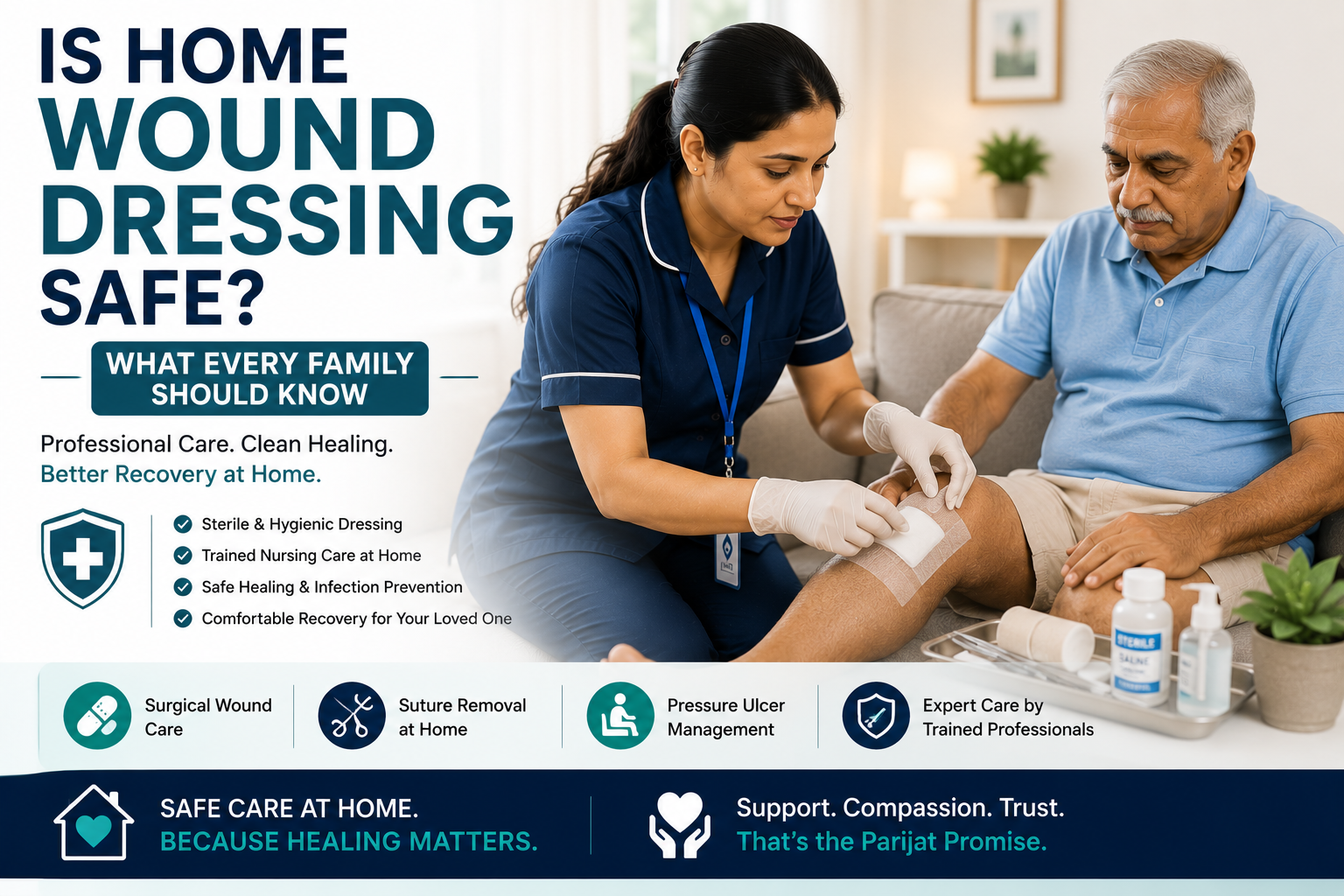
A wound may look small on the outside, but proper wound care can be an important part of recovery.
This becomes particularly important after surgery, an injury, a procedure, or when a patient has limited mobility.
Many families ask the same question:
“Can wound dressing be done safely at home?”
In appropriate situations, wound care at home can be a convenient option—especially when a patient has been discharged from the hospital but still requires regular dressing or monitoring.
However, home wound care should not mean treating a wound casually.
The type of wound, dressing method, frequency of dressing changes and supplies required can vary considerably. Surgical wounds, pressure ulcers, chronic wounds and other injuries may require different approaches.
For families searching for wound dressing at home in Jaipur, professional support can help ensure that appropriate care instructions are followed.
Parijat Nursing Care & Solutions currently lists sterile surgical wound dressing, suture removal and pressure ulcer care among its patient-care services.
What Is Wound Dressing?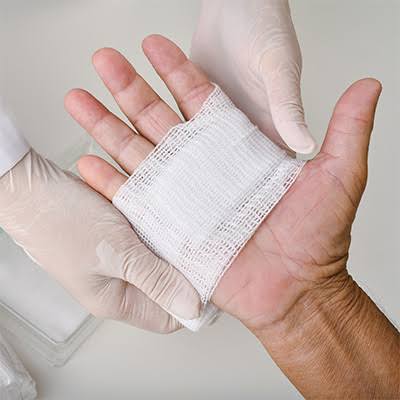
Wound dressing involves protecting and caring for a wound using appropriate materials and techniques according to the wound and medical instructions.
The purpose may include:
- Protecting the wound
- Supporting a clean healing environment
- Managing wound drainage
- Preventing unnecessary contamination
- Protecting surrounding skin
- Monitoring changes during recovery
The exact dressing method depends on the wound.
A family should not assume that the same dressing technique is appropriate for every wound.
Can Wound Dressing Be Done at Home?
Yes, some wounds can be managed at home when the patient has been assessed and the treating healthcare professional has provided appropriate instructions.
Home wound care may be particularly convenient for:
- Patients recovering after surgery
- Elderly patients with mobility limitations
- Patients who find travel difficult
- Patients requiring repeated dressing changes
- Patients with pressure-related wounds
- Patients who need continued wound observation
However, some wounds require direct clinical assessment or hospital-based treatment.
The safest approach is to follow the treating doctor’s instructions and involve a qualified professional when skilled wound care is required.
Why Professional Wound Dressing Can Be Helpful
Wound care requires more than simply placing a bandage over an injury.
A professional can help with appropriate preparation, dressing technique, hygiene and observation of the wound according to the care plan.
This can be especially valuable when:
- The wound is surgical
- Sutures or staples are present
- The patient cannot move easily
- The wound requires repeated dressing
- There is significant drainage
- The patient has other health conditions
- Family members are uncomfortable handling the wound
Parijat’s current patient-care service specifically describes sterile surgical wound dressing, suture removal and pressure ulcer care at home.
Common Situations That May Require Home Wound Care
Surgical Wounds
After surgery, a patient may need dressing changes according to the surgeon’s instructions.
The wound should be monitored for changes and managed according to the prescribed care plan.
Pressure Ulcers
Patients who spend long periods in bed or have limited mobility may develop pressure-related wounds.
These wounds require careful attention and should be managed according to medical guidance.
Wounds After Injury
Some injuries may require continued dressing after initial treatment.
Post-Procedure Wounds
Certain medical procedures can leave wounds that require short-term care during recovery.
7 Things Families Should Know Before Dressing a Wound at Home
1. Follow the Prescribed Dressing Schedule
Do not assume that a wound should be dressed every day simply because it is visible.
The frequency depends on the wound and medical instructions.
Changing a dressing unnecessarily—or leaving one in place longer than advised—may not be appropriate.
Follow the instructions provided by the treating healthcare professional.
2. Keep the Dressing Area Clean
Wound care should be performed in an appropriately clean environment.
Hands should be cleaned before and after handling wound-care materials.
The exact cleaning process should follow professional instructions.
3. Do Not Touch the Wound Unnecessarily
Repeatedly touching a wound can introduce contamination.
Families should avoid unnecessary handling and follow the prescribed technique.
4. Use Appropriate Dressing Materials
Different wounds require different dressing materials.
Do not automatically substitute household items for medical dressing supplies.
If you are unsure which material to use, ask the treating healthcare professional.
5. Observe Changes
During dressing changes, families or caregivers may notice changes in the wound.
Pay attention to:
- Increasing redness
- Swelling
- Unusual discharge
- Increasing pain
- Foul smell
- Bleeding
- Changes in the surrounding skin
These observations should be communicated to the appropriate healthcare professional.
6. Do Not Remove Sutures Yourself
Suture removal should be performed according to the surgeon’s instructions and by an appropriately trained professional.
Trying to remove sutures at home without proper guidance can create unnecessary risk.
Parijat lists suture removal as part of its home wound-care service.
7. Know When Home Care Is Not Enough
Home wound dressing is not a substitute for medical evaluation when the wound appears to be worsening.
Seek prompt medical advice if there are concerning changes such as significant bleeding, severe or increasing pain, rapidly increasing swelling, spreading redness, pus-like discharge, fever, or other symptoms that concern you.
For serious or rapidly worsening symptoms, urgent medical evaluation may be necessary.
Wound Dressing After Surgery
Post-surgical wounds require particular attention because the patient is already recovering from an operation.
The family may be managing:
- Medicines
- Rest
- Mobility
- Nutrition
- Follow-up appointments
- Wound dressing
Trying to manage everything without support can become difficult.
Professional post-surgery care can combine wound management with other recovery needs.
Parijat’s patient-care service includes wound care and dressing alongside vital monitoring, medication management, mobility assistance, nutrition, personal care and additional recovery support.
Internal Link Opportunity: Link “post-surgery and patient care” to Parijat’s Post-Surgery & Patient Care page.
Wound Dressing for Elderly Patients
Older adults may require additional assistance with wound care because mobility, vision or general strength can make dressing changes difficult.
An elderly patient may also need support with:
- Positioning
- Personal hygiene
- Mobility
- Nutrition
- Medication routines
- Regular monitoring
For families managing elderly wound care, combining appropriate nursing support with daily elder care can make the overall care routine easier to manage.
Can Family Members Perform Wound Dressing?
In some situations, families may be taught basic wound-care procedures by their healthcare provider.
However, whether a family member should perform the dressing depends on the wound and the instructions provided by the treating healthcare professional.
Professional support may be preferable when:
- The wound is difficult to access
- Sterile technique is required
- The patient has limited mobility
- The family is uncomfortable handling the wound
- There are sutures or specialized dressings
- The wound requires professional assessment
The goal is not to make every family member a healthcare professional.
The goal is to ensure that the patient receives appropriate care safely.
What Makes Professional Wound Care Different?
Professional wound care focuses on following the patient’s prescribed care plan rather than using a generic approach.
A trained professional can help maintain the appropriate dressing routine and observe changes that may need medical attention.
Parijat’s current home-care offering includes sterile surgical wound dressing, suture removal and pressure ulcer care.
How to Choose Wound Dressing Services in Jaipur
When looking for wound dressing at home in Jaipur, consider the following:
Professional Experience
Ask whether the provider has experience with the type of wound your family member has.
Trained Staff
Make sure the person performing skilled wound care has appropriate training.
Hygiene Practices
Wound care requires appropriate hygiene and handling of dressing materials.
Personalized Care
The wound should be managed according to the patient’s medical instructions.
Communication
The family should know how to report changes and when the patient should be reviewed by the treating doctor.
Availability
If dressing changes are required regularly, choose a service that can support the required schedule.
How Wound Care Fits Into Overall Patient Care
Wound care should not be considered separately from the patient’s overall recovery.
A patient recovering from surgery may simultaneously need:
- Vital monitoring
- Medication management
- Mobility assistance
- Nutrition support
- Personal hygiene
- Wound dressing
- Rehabilitation
This is why a coordinated home-care plan can be valuable.
Parijat’s patient-care service combines several of these support areas under a personalized recovery approach.
Frequently Asked Questions
Is wound dressing at home safe?
Some wounds can be safely managed at home when the patient is medically suitable for home recovery and the dressing procedure follows professional instructions. Complex or worsening wounds require medical assessment.
How often should a wound dressing be changed?
There is no universal schedule. Dressing frequency depends on the wound, dressing type and healthcare professional’s instructions.
Can I dress a surgical wound myself?
In some cases, families may be instructed by a healthcare professional. However, surgical wounds should be managed according to the surgeon’s specific instructions.
Can a nurse provide wound dressing at home in Jaipur?
Yes, professional home-care services may provide wound dressing for suitable patients. Parijat currently lists sterile surgical wound dressing and related wound-care services among its patient-care offerings.
What are signs that a wound may need medical attention?
Concerning signs can include increasing redness, swelling, severe or worsening pain, unusual discharge, significant bleeding, fever or other changes that suggest the wound is not recovering as expected.
Can elderly patients receive wound dressing at home?
Yes, suitable elderly patients may receive professional wound-care support at home, particularly when travelling to a clinic is difficult.
Is wound dressing included in post-operative home care?
It can be part of post-operative home care when clinically appropriate. Parijat lists wound care and dressing as part of its post-surgery and patient-care services.
How much does wound dressing at home cost in Jaipur?
The cost can vary depending on the type of wound, dressing requirements, frequency of visits and professional care required. Families should discuss the patient’s specific requirements with the provider.
Final Thoughts
Wound dressing at home can be a practical option for suitable patients, particularly after surgery or when mobility makes frequent clinic visits difficult.
But home wound care should always be approached seriously.
The correct dressing technique, appropriate materials, hygiene practices and follow-up instructions depend on the individual wound. Families should avoid improvising treatment or ignoring changes in the wound.
For patients who require professional support, wound dressing at home in Jaipur can provide a convenient way to continue appropriate care while recovering in familiar surroundings.
Parijat Nursing Care & Solutions provides home-based patient-care support that includes wound care and dressing, alongside vital monitoring, medication management, mobility assistance, nutrition and personal care.
Need professional wound dressing at home in Jaipur? Contact Parijat Nursing Care & Solutions to discuss your patient’s requirements and arrange appropriate home-care support.

Leave a Reply