


You Need Someone at Home. But Do You Actually Need a Nurse?
When a parent becomes elderly, a family member comes home after surgery, or a patient becomes dependent on others for everyday activities, one question comes up quickly:
“Should we hire a home nurse or a patient attendant?”
For many families, the two terms sound interchangeable.
After all, both professionals may spend time with the patient, help with daily activities, and provide support at home.
But there is an important difference.
A home nurse is primarily associated with professional nursing and clinical care, while a patient attendant generally focuses on personal assistance, daily activities, mobility, feeding support, and companionship.
Choosing between them depends on what your loved one actually needs.
If the patient requires wound dressing, IV-related care, catheter care, tube-related care, nebulization, vital monitoring, or other nursing procedures, professional nursing support may be required.
If the patient is medically stable but needs help bathing, eating, walking, dressing, or managing everyday activities, an attendant or caregiver may be more suitable.
And in some situations, the patient may need both.
This guide explains the difference between a home nurse and patient attendant, how to identify the right level of support, and what families in Jaipur should consider before arranging home care.
Important: Home healthcare requirements vary from patient to patient. Clinical procedures should be performed by appropriately qualified healthcare professionals and according to the patient’s medical instructions.
What Is a Home Nurse?
A home nurse is a trained nursing professional who provides appropriate nursing care to patients in their homes.
The exact responsibilities depend on the nurse’s qualifications, the patient’s condition, the doctor’s instructions, and the scope of the service.
Depending on the patient’s requirements, professional nursing care may include:
- Vital monitoring
- Medication-related nursing support
- Wound dressing
- IV injections
- IV infusions
- Ryles tube-related care
- Foley catheter-related care
- Nebulization
- Post-surgery care
- Patient observation
- Recovery support
The main distinction is that nursing involves clinical responsibilities.
A patient who requires a medical procedure should not be assigned to someone simply because they are available at home.
The professional providing the procedure needs appropriate training and qualifications.
What Is a Patient Attendant?
A patient attendant primarily provides support with everyday activities and personal care.
An attendant may help a patient with:
- Bathing
- Dressing
- Feeding
- Toileting
- Walking
- Getting in and out of bed
- Position changes
- Basic daily routines
- Meal assistance
- Companionship
- General supervision
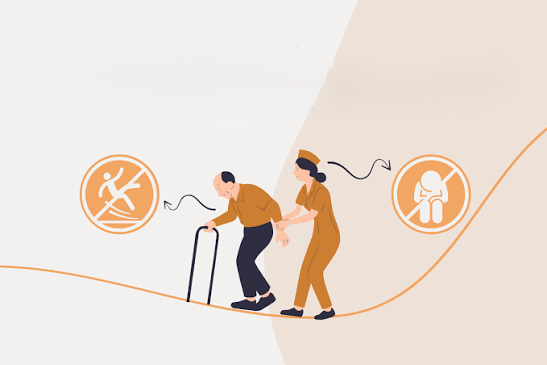
Patient attendants can be particularly useful for elderly people, recovering patients, people with limited mobility, or individuals who need assistance throughout the day.
Their role is often less clinical and more focused on helping the patient manage daily life safely and comfortably.
Home Nurse vs Patient Attendant: The Basic Difference
The easiest way to understand the difference is to separate clinical care from daily-living support.
Home Nurse
Primarily provides:
Clinical + nursing support
Patient Attendant
Primarily provides:
Personal + daily-living support
However, there can be some overlap depending on the service arrangement.
For example, both may potentially assist a patient with basic mobility or personal care.
The important question is whether the patient requires a trained nursing professional for a clinical procedure.
When Does a Patient Need a Home Nurse?
There are several situations where professional nursing may be more appropriate.
1. The Patient Needs Wound Dressing
A patient recovering from surgery or dealing with a wound may need regular dressing according to medical instructions.
Wound care may require knowledge of:
- Dressing technique
- Hygiene
- Infection-control practices
- Observation of the wound
- Appropriate handling of dressing materials
- Recognition of concerning changes
If the wound requires professional clinical care, a trained nurse may be more appropriate than a general attendant.
2. The Patient Needs IV Treatment
IV injections and infusions are clinical procedures.
If a doctor has prescribed IV treatment at home, it should be provided by an appropriately trained healthcare professional.
Families should not expect a patient attendant to perform IV procedures simply because they have experience caring for patients.
The level of professional qualification matters.
3. The Patient Has a Foley Catheter
Some patients require urinary catheterization because they cannot empty their bladder normally or have another medical indication.
Catheter-related care may involve professional nursing support, particularly when insertion, replacement, or other clinical procedures are required.
Families should not ask an unqualified caregiver to perform catheter insertion.
4. The Patient Has a Ryles Tube
Patients who cannot safely consume sufficient nutrition orally may sometimes require a feeding tube.
Ryles tube-related care can involve:
- Feeding according to the prescribed plan
- Tube observation
- Hygiene
- Appropriate positioning
- Related nursing procedures
The exact care required depends on the patient’s medical plan.
When clinical tube-related procedures are necessary, appropriately trained nursing support is important.
5. The Patient Requires Nebulization
Some patients may be prescribed nebulization as part of respiratory treatment.
A nurse may assist with the prescribed procedure and observe the patient during care.
However, severe breathing difficulty should never be managed solely through routine home nursing.
Emergency medical care should be sought when the patient has serious or rapidly worsening symptoms.
6. The Patient Requires Regular Vital Monitoring
Some patients need regular monitoring of parameters such as:
- Blood pressure
- Pulse
- Temperature
- Oxygen saturation
- Other relevant observations
A nurse may be appropriate when monitoring forms part of the patient’s clinical care plan.
The purpose is not simply to record numbers.
Changes should be communicated appropriately to the family and treating healthcare team when required.
When Is a Patient Attendant More Appropriate?
Not every patient who needs help at home needs a nurse.
This is an important distinction.
Suppose an elderly parent is medically stable but has difficulty:
- Walking
- Bathing
- Dressing
- Preparing meals
- Getting out of bed
- Managing everyday activities
In that situation, a patient attendant or caregiver may provide the support the family needs.
The patient’s medical condition should still be considered, but the primary requirement may be daily assistance rather than clinical nursing.
Elderly Parents and Patient Attendants
Older adults often want to remain independent for as long as possible.
However, tasks that were once easy may gradually become difficult.
An elderly person may need help with:
- Morning hygiene
- Bathing
- Dressing
- Meals
- Walking
- Exercise
- Medication reminders
- Household routines
- Companionship
Parijat’s elder-care services include daily living support, personal care, meal preparation and feeding assistance, mobility assistance, exercise support, companionship, and medication reminders.
This type of assistance can allow families to support an elderly parent without taking away their sense of independence.
The Patient May Need Both
This is where the decision becomes more complicated.
Consider a patient recovering after surgery.
The patient may need a nurse for:
- Wound dressing
- Vital monitoring
- Medication-related care
But the same patient may need an attendant for:
- Bathing
- Feeding
- Walking
- Dressing
- Companionship
- Everyday supervision
In this situation, trying to make one person handle every responsibility may not always be ideal.
A combination of professional nursing and patient-attendant support may provide a more appropriate division of responsibilities.
8 Questions to Ask Before Choosing
Before booking home care, sit with your family and answer these questions.
Question 1: Can the patient walk independently?
If the patient needs assistance getting out of bed or walking, caregiver support may be necessary.
Question 2: Can the patient manage personal hygiene?
If bathing, toileting, dressing, or grooming requires assistance, an attendant may be useful.
Question 3: Does the patient have a medical procedure scheduled?
If yes, determine whether a qualified nurse is required.
Question 4: Does the patient have a wound?
If professional dressing is required, nursing care may be appropriate.
Question 5: Does the patient have a catheter or feeding tube?
If clinical management is required, professional nursing support may be necessary.
Question 6: Does the patient require IV treatment?
If yes, appropriate professional nursing care is required.
Question 7: Does the patient need regular clinical monitoring?
If yes, consider nursing support rather than relying solely on an attendant.
Question 8: How many hours of assistance are needed?
A patient may need only a short nursing visit or may need longer daily assistance.
The answer can significantly change the most suitable care arrangement.
Home Nurse vs Patient Attendant After Surgery
After surgery, families often assume that a nurse is required around the clock.
That isn’t necessarily the case.
The patient’s actual recovery requirements should determine the level of support.
For example, a patient may require professional nursing visits for wound care and monitoring while an attendant helps with everyday activities between visits.
Another patient with more complex needs may require more frequent nursing support.
Parijat’s post-surgery and patient-care services cover areas such as vital monitoring, wound care, medication management, mobility assistance, nutrition support, personal care, catheter and tube care, rehabilitation exercises, and family communication.
This demonstrates why care should be planned around the patient, rather than simply selecting a generic “home attendant” or “home nurse” package.
Home Nurse vs Patient Attendant for Bedridden Patients
A bedridden patient can have both clinical and personal-care needs.
Nursing Requirements May Include:
- Wound care
- Vital monitoring
- Catheter-related procedures
- Feeding-tube care
- IV treatment
- Nebulization
- Medication-related nursing support
Attendant Requirements May Include:
- Bathing
- Feeding assistance
- Toileting
- Positioning
- Changing clothes
- Bed-making
- Companionship
- General daily support
For a patient with extensive needs, combining the two roles may be more practical.
Don’t Confuse Medication Reminders With Medication Decisions
Medication is another area where families can become confused.
A caregiver may remind a patient that it is time for their prescribed medicine.
However, changing medication, adjusting doses, deciding whether a medicine should be stopped, or making treatment decisions are medical matters.
Families should follow the treating doctor’s instructions.
If there is uncertainty about a medication, consult the appropriate healthcare professional rather than asking a caregiver to make the decision.
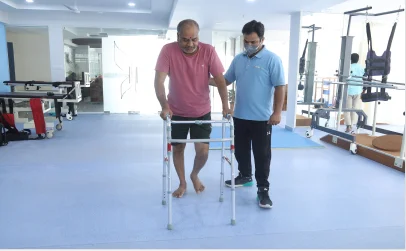
What About Mobility and Exercise?
Mobility support is important for elderly and recovering patients.
An attendant may help a patient with everyday movement when the activity has been considered safe.
However, rehabilitation exercises should follow appropriate professional guidance.
For example, a patient recovering after a stroke or surgery may require physiotherapy.
A caregiver should not independently create a rehabilitation program.
Instead, the patient’s doctor or physiotherapist should determine what exercises and movements are appropriate.
How to Choose a Home Care Provider in Jaipur
Once you’ve determined whether you need a nurse, attendant, or both, the next step is choosing a reliable provider.
1. Explain the Patient’s Condition
Don’t simply say:
“I need a nurse.”
Explain what the patient actually needs.
For example:
“The patient has recently undergone surgery and needs wound dressing and mobility assistance.”
This gives the provider a clearer understanding of the requirement.
2. Ask About Professional Qualifications
For clinical nursing procedures, confirm that the assigned professional has appropriate training and qualifications.
3. Understand the Service Scope
Ask exactly what the professional will and will not provide.
This prevents misunderstandings later.
4. Discuss the Schedule
Determine whether the patient needs:
- One-time support
- Daily visits
- Weekly visits
- Long-term assistance
- Extended caregiver support
The appropriate schedule depends on the patient’s needs.
5. Ask About Continuity of Care
If the patient needs ongoing assistance, consistency can be valuable.
Families may prefer a care arrangement where the patient’s requirements are documented and communicated clearly between visits or caregivers.
Why Professional Home Care Can Help Families
Caring for a loved one can be physically and emotionally demanding.
Family members may have jobs, children, household responsibilities, and other commitments.
At the same time, they may feel guilty about asking someone else for help.
But professional home care does not mean the family is abandoning the patient.
It means responsibilities are being shared.
A nurse can handle appropriate clinical responsibilities.
An attendant can assist with daily activities.
Family members can focus on emotional support, communication, and spending meaningful time with their loved one.
This division can make home care more sustainable.
Signs That Your Current Care Arrangement Isn’t Enough
Families should reassess the care arrangement if:
- The patient is frequently left alone despite needing supervision
- Family caregivers are becoming exhausted
- Clinical procedures are being performed by unqualified people
- Medication instructions are becoming confusing
- The patient’s mobility is declining
- Hygiene needs are not being met
- The patient needs more assistance than before
- New medical procedures have been added
- The patient’s condition has changed
Care needs can change over time.
The arrangement that worked last month may not be sufficient today.
A Simple Decision Guide
Use this as a starting point.
Mainly needs bathing, feeding, dressing and companionship?
Consider a patient attendant/caregiver.
Needs wound dressing or clinical procedures?
Consider professional nursing care.
Needs IV treatment?
Qualified nursing professional required.
Needs catheter or feeding-tube procedures?
Professional nursing support may be required.
Needs help with everyday activities plus clinical procedures?
Consider a combination of nurse + attendant support.
Has severe or rapidly worsening symptoms?
Seek medical attention rather than relying on routine home care.
Frequently Asked Questions
Is a home nurse the same as a patient attendant?
No. A home nurse primarily provides professional nursing and clinical support, while a patient attendant generally focuses on personal care, daily activities, mobility, feeding assistance, and companionship.
Does an elderly person always need a nurse?
No. If the elderly person is medically stable and mainly needs help with daily activities, an attendant may be sufficient. Clinical requirements may call for nursing support.
Can a patient attendant perform medical procedures?
Clinical procedures should be performed only by appropriately trained and qualified healthcare professionals within their professional scope.
Can a home nurse provide personal care?
Depending on the care arrangement and patient’s needs, a nurse may assist with certain personal-care activities in addition to nursing responsibilities.
Can a patient have both a nurse and an attendant?
Yes. Patients with both clinical and daily-living needs may benefit from having nursing and attendant support.
How do I know which service my parent needs?
Start by listing their clinical needs separately from their daily-living needs. This makes it easier to determine whether you need nursing care, an attendant, or both.
Is home nursing available in Jaipur?
Yes. Professional home healthcare providers in Jaipur offer different nursing and caregiving services depending on the patient’s requirements.
Final Thoughts
Choosing between a home nurse and patient attendant in Jaipur should never be based simply on job titles.
Start with the patient.
Ask:
What can they do independently?
What do they need help with every day?
Do they require clinical procedures?
Are their needs temporary or ongoing?
Do family members have enough time and ability to provide the required support?
If the patient mainly needs personal assistance and companionship, a patient attendant may be the appropriate choice.
If the patient requires clinical procedures or nursing care, a qualified home nurse may be necessary.
And if the patient needs both types of support, combining the two can provide a more complete home-care arrangement.
Parijat Nursing Care & Solutions offers nursing, elder-care, and patient-care services designed around different home healthcare requirements.
The goal is not to hire the “most qualified” person for every situation.
The goal is to arrange the right level of professional support for the patient’s actual needs.
Because good home care isn’t about doing everything yourself.
It’s about making sure the right person is doing the right job at the right time.

Leave a Reply